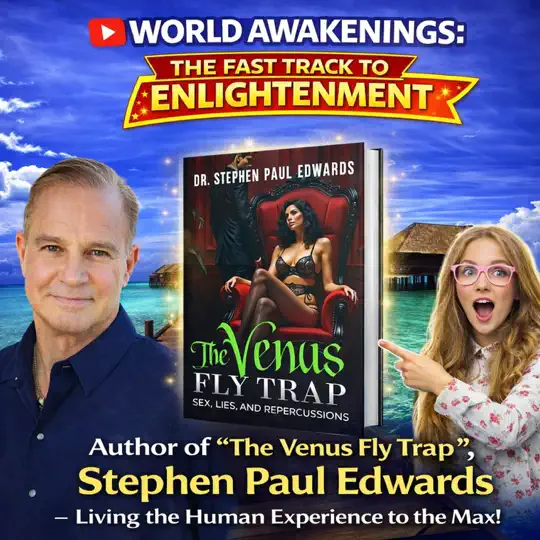
In this episode, Katie welcomes Dr. Stephen Paul Edwards, an English businessman turned spiritual counselor with a PhD in spiritual counseling. Known for his precision, discipline, and high-achieving career, Stephen spent decades building successful ventures, tearing them down, and rebuilding again, never quite understanding that the restlessness driving him was rooted in running away from himself.
Stephen opens up about his fourth divorce, a period of deep burnout, and the toxic but transformative relationship that followed. Rather than protecting his image, he wrote it all down, the chaos, the shame, the humor, and published it as a book. His honesty about those experiences has become the very thing that helps his clients recognize their own patterns before losing years to them.
This first part of the conversation explores what happens when high achievers hit a wall, why we are drawn to people who reflect our hidden selves, and what it actually means to come home to yourself after a lifetime of running away from it.
Key Takeaways
→ Wherever you go, there you are. Stephen spent decades traveling city to city, country to country, unconsciously believing the next place would be where he finally found himself. The pattern only broke when he recognized he was his own home.
→ We are drawn to people who display what we are hiding. Citing Robert Greene, Stephen explains that we often enter chaotic relationships because the other person is expressing the dark or free side of ourselves we have suppressed.
→ Material success does not bring happiness. Stephen has been there, built it, and lost it. Without inner alignment, the accolades and things are just empty.
→ Vulnerability is freedom. Writing and sharing the most embarrassing chapters of his life released Stephen from the prison of trying to be someone he was not. It opened up conversations he never expected and gave him a sense of freedom he had never felt before.
→ Knowing what to do and doing what you know are two very different things. Stephen kept journals for years in a personal development career and never actually used them. Awareness without action does not create change. → You only know if you are healed when you are tested. Stephen had not responded to his ex returning into his life. For him, that silence was significant progress, not certainty.
→ Being happily single is a valid and powerful place to be. Stopping the cycle of jumping from one relationship to the next and learning to enjoy his own company has been one of Stephen’s most important growths.